This post contains affiliate links. As an Amazon Associate I earn from qualifying purchases, at no extra cost to you. Every link goes to Amazon Japan (amazon.co.jp), where prices are listed in Japanese yen and the site can be switched to English. The dollar figures below are rough guides only, so check the current price and whether it ships to your address before you buy.
Quick answer: If you want to drink matcha straight and you’re not sure where to start, get a small can of Marukyu-Koyamaen “Yugen”. It’s from one of Uji’s most respected tea houses, it’s genuinely smooth, and a 40g can lasts a beginner weeks. Read on for the full breakdown.
I wasted money on my first matcha. I bought a big bag of bright-green powder, whisked it up, and it was so bitter I nearly gave up. The problem wasn’t me. It was the grade. I’d bought culinary matcha and tried to drink it straight.
So before you buy, let’s settle the one distinction that saves beginners the most money and frustration.
Ceremonial vs Culinary: What’s the Difference?
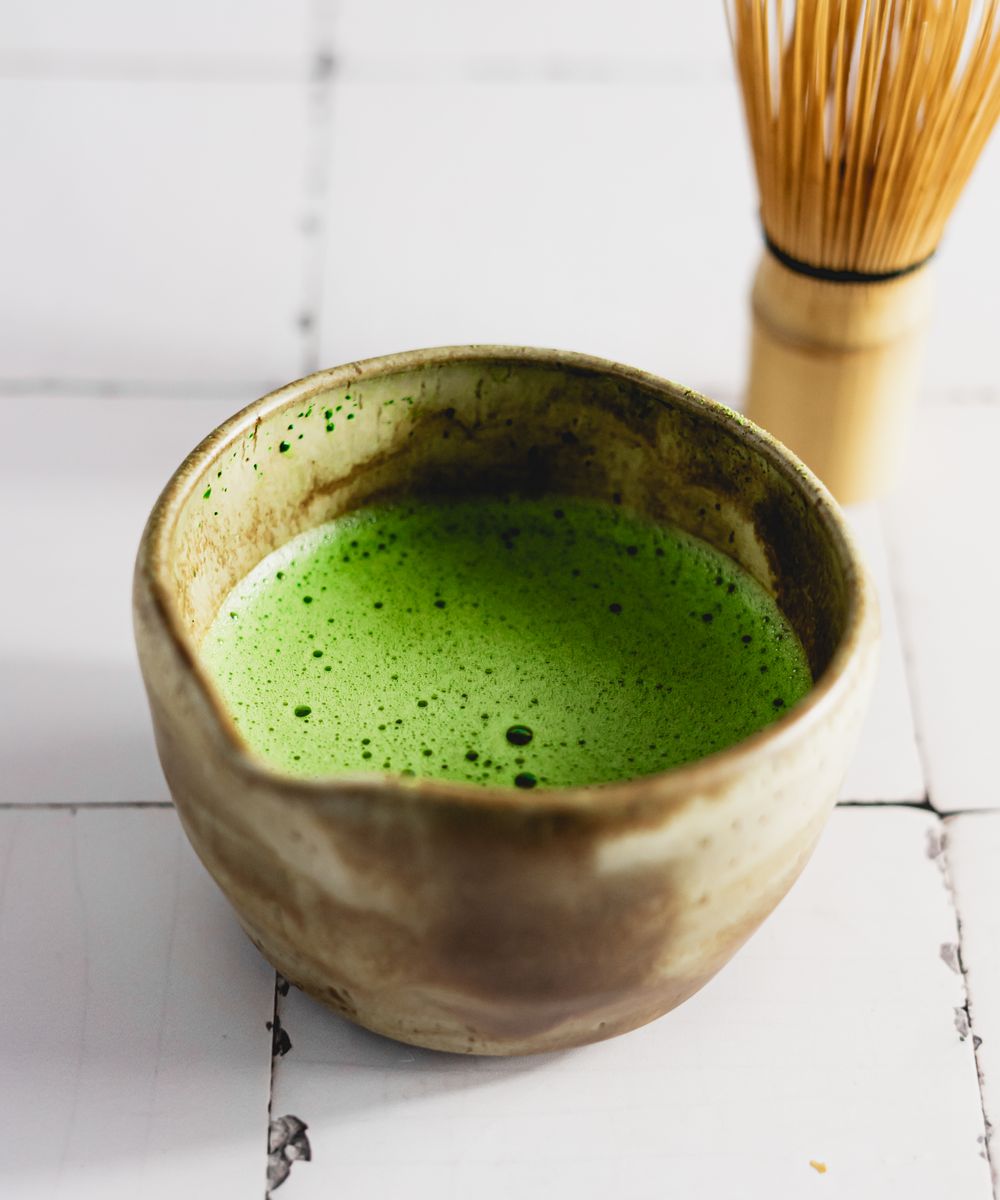
Ceremonial grade is made from the youngest tea leaves, stone-ground slowly into a fine powder. It’s smoother, sweeter, and a vivid green. It’s meant to be drunk with just hot water. This is what you want if you’re making a plain bowl of matcha.
Culinary grade is made from later-harvest leaves. It’s stronger and more bitter, which is exactly what you want when it has to cut through milk and sugar in a latte, or flour in a cake. It’s also noticeably cheaper.
Here’s the simple rule. Drinking it straight? Buy ceremonial. Making lattes or baking? Buy culinary. Buying an expensive ceremonial matcha and then drowning it in oat milk is the most common and costly beginner mistake.
One note on the words themselves: “ceremonial grade” is a marketing term used overseas, not an official Japanese classification. In Japan, the same tea is usually just labeled as high-grade usucha (thin tea) matcha. So judge by the tea house and the taste, not only the label.
Comparison at a Glance
| Matcha | Grade | Size | Best for | Rough price |
|---|---|---|---|---|
| Marukyu-Koyamaen Yugen | Ceremonial | 40g | Best overall for drinking | $25–35 |
| Organic ceremonial (small can) | Ceremonial (organic) | 30g | Best small trial can | $15–25 |
| Culinary Uji matcha | Culinary | 100g | Best for lattes and baking | $15–25 |
| Larger everyday culinary | Culinary | 100g | Best value for heavy latte use | $15–25 |
1. Marukyu-Koyamaen “Yugen” — Best Overall for Drinking
Marukyu-Koyamaen is one of the most respected matcha houses in Uji, and they’ve been at it since the Genroku era. Their “Yugen” is a fantastic first ceremonial matcha: gently sweet, clean, with no fishy or grassy edge, and no added coloring or flavoring. A 40g can whisks into a smooth, bright bowl and lasts a beginner a few weeks of daily cups. If it’s your very first tin, measure about half a teaspoon per bowl — getting the dose right is half the battle when you start.
Pros: a genuinely top Uji house; smooth and forgiving; no additives.
Cons: ceremonial pricing, so it’s not the cheapest way to experiment.
Bottom line: the safest first ceremonial matcha for most people. → See Marukyu-Koyamaen Yugen on Amazon.
2. Organic Ceremonial Matcha (Small Can) — Best Trial Size
If you’d rather not commit to a full ceremonial tin, a small 30g organic can is a low-risk way to see whether you even enjoy matcha straight. The quality won’t match a top Uji house, but it’s a fair, additive-free introduction with an English label.
Pros: cheaper entry; small size; organic and additive-free.
Cons: not as refined as a specialist tea house.
Bottom line: a sensible “am I into this?” purchase. → See the organic ceremonial can on Amazon.
3. Culinary Uji Matcha — Best for Lattes and Baking
For matcha lattes, smoothies, and baking, don’t waste ceremonial grade. A good culinary Uji matcha gives you a strong, green matcha flavor that holds up against milk and sugar, in a larger 100g size that won’t hurt to cook with.
Pros: big size; strong flavor for lattes and sweets; much cheaper per gram.
Cons: too bitter to enjoy drunk straight.
Bottom line: the smart buy if lattes are your main use. → See a culinary Uji matcha on Amazon.
4. Larger Everyday Culinary — Best Value for Heavy Latte Use
If matcha lattes are a daily habit, a second 100g culinary tin kept in the cupboard means you never ration the good stuff. It’s the same idea as the pick above — strong, green, made for milk — just a sensible backup so you’re not opening your ceremonial can for a weekday iced latte.
Pros: great cost per gram; perfect for everyday lattes and cooking.
Cons: not for drinking straight; flavor varies a little by brand.
Bottom line: stock this if you drink matcha lattes most days. → See a larger everyday culinary matcha on Amazon.
Which One Should You Buy?
- If you want to drink matcha straight, get the Marukyu-Koyamaen Yugen.
- If you’re not sure you’ll like it, start with the small organic can.
- If you mostly make lattes, buy culinary grade and save your money.
- If lattes are a daily thing, keep a larger culinary tin on hand too.
How to Store Matcha So It Stays Green
Matcha fades fast once it meets air, light, and heat. Keep the can sealed, in the fridge if you can, and away from the stove. Bring it back to room temperature before opening so condensation doesn’t get in. And buy small: a 40g can you finish in a month beats a 200g bag that goes dull and hay-like by the bottom.
FAQ
Is ceremonial grade really worth it for a beginner?
For drinking straight, yes. The smoothness is the whole point, and cheap culinary matcha drunk plain is what makes beginners quit. For lattes, no. Buy culinary.
How much matcha will I use?
About 1 to 2 grams per bowl (roughly half a teaspoon to a teaspoon). A 40g can is around 20 to 40 bowls, so a few weeks of daily matcha.
How long does matcha last once opened?
Best within about a month of opening for peak flavor and color. It’s still safe after that, just duller and less sweet. This is why small cans win.
What do I need besides the powder?
A whisk and a bowl. See our best matcha whisk for beginners, and our beginner’s guide to making matcha at home for the actual technique.
Final Thoughts
Get the grade right and matcha stops being a gamble. For drinking, start with a small can of a real Uji house like Marukyu-Koyamaen; for lattes, keep a culinary tin on hand. Buy small, store it cool, and drink it fresh. That’s most of the secret.
↑ Back to top